Diversification for Farm Resilience
Solution 3: Creating a Strong Brand Identity
Rational Deworming
On-farm Processing and Direct Sales
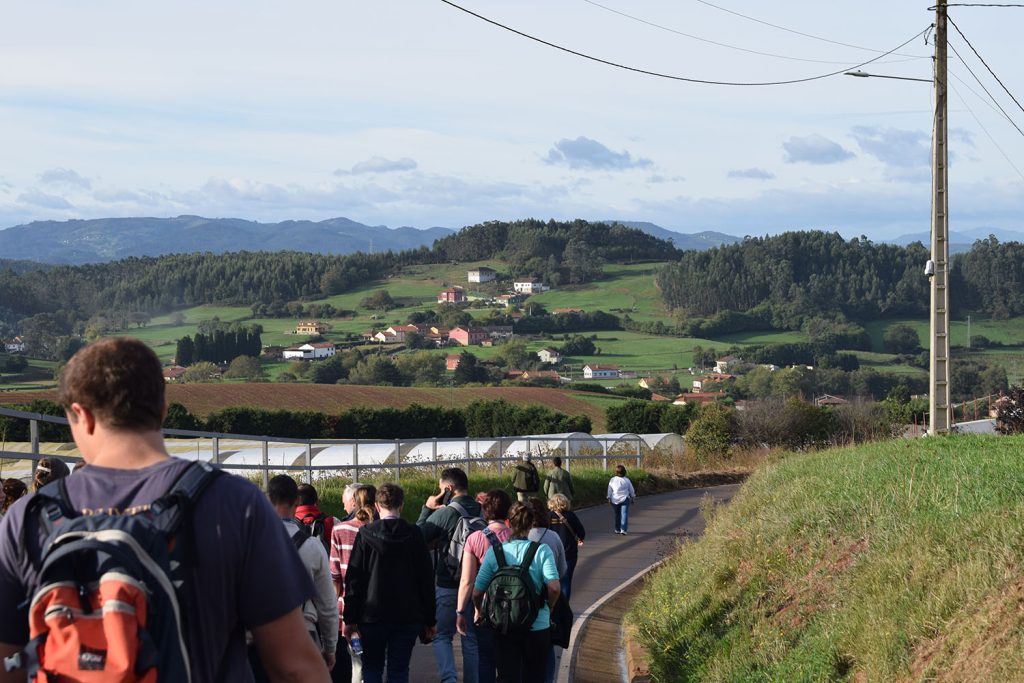
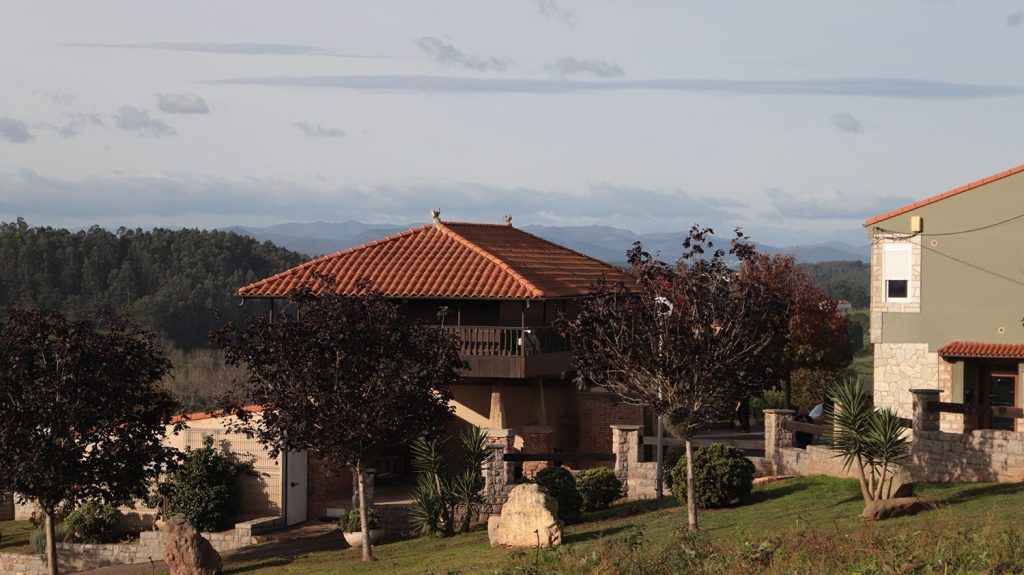
Casa Bartuelo, gelegen in het noorden van Asturië nabij Cabo Peñas, is een Asturische Casería voor meerdere generaties die een voorbeeld is van een circulair, zelfvoorzienend landbouwmodel dat akkerbouw en veeteelt integreert, waaronder paarden en rundvee die in de wei worden gehouden. Dit familiebedrijf van 100 hectare combineert seizoensgroenten, traditionele bonen en voedergewassen, produceert zijn eigen hooi en optimaliseert lokale hulpbronnen, terwijl het de betrokkenheid van de gemeenschap bevordert door middel van directe marketing en verwerking op de boerderij. De familie legt sterk de nadruk op generatiecontinuïteit en zorgt ervoor dat jongere leden betrokken zijn bij het beheer van de boerderij en zich inzetten voor het behoud van het familie-erfgoed.
De veeteelt wordt gedomineerd door Asturiana de los Valles-vleesvee, dat onder beschermde geografische aanduidingen op de markt wordt gebracht, naast Hispano-Bretón-paarden die voor de vleesproductie worden gefokt. Het veebestand wordt beheerd door middel van seizoensgebonden transhumance naar Extremadura om zich aan te passen aan het natte klimaat en het steile terrein van Noord-Spanje. De paarden worden gehouden in vijf roterende graasgroepen en krijgen als aanvulling op hun voer maïskuilvoer, sojaconcentraat en hooivoer van de boerderij. De voedingssamenstelling wordt regelmatig geanalyseerd en geoptimaliseerd door agronomen en dierenartsen van de coöperatie.
Het gezondheidsbeheer combineert strategische, laagfrequente ontworming met bestrijding van uitwendige parasieten, waarbij gebruik wordt gemaakt van uitgestrekte vrij toegankelijke weiden om de parasietencycli op natuurlijke wijze te doorbreken. Casa Bartuelo laat zien hoe traditie, diversificatie, duurzaam gebruik van hulpbronnen en marktgerichte strategieën de veerkracht, economische levensvatbaarheid en de succesvolle overdracht van kennis en verantwoordelijkheden tussen generaties in familiebedrijven op het platteland versterken.
Diversification for Farm Resilience
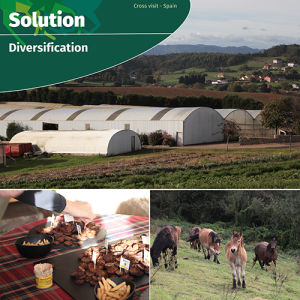
This farm demonstrates how the diversification of activities can be a key driver of resilience. The farmers emphasize the importance of creating multiple income streams to strengthen both economic stability and operational efficiency of the Casería structure. Their model integrates crop and livestock production, including meat-producing cattle and horses, within a circular, self-sustaining system that makes optimal use of available resources.
Purpose of the Solution
Diversifying farm activities is an effective way to reduce economic risk and enhance resilience. By combining core operations, such as animal breeding, with complementary activities like crop production (including seasonal vegetables, traditional faba and verdina beans, and forage for animal feed), and guided farm visits, farmers can create multiple, interlinked income sources.
This approach not only improves resource efficiency but also helps stabilize income across seasons and buffer market fluctuations, contributing to a more sustainable and adaptive farming system.
Benefits
- Economic resilience: multiple income sources reduce dependence on a single market.
- Efficient resource use: land, facilities, and labour serve multiple purposes.
- Risk reduction: diversification acts as a buffer against seasonal or sector-specific downturns.
- Increased visibility: agritourism and educational activities attract new audiences and customers.
- Job creation: additional services foster local employment opportunities.
- Enhanced sustainability: integration of agroforestry and circular practices supports environmental goals.
Drawbacks/ Potential Challenges
- Increased complexity: managing diverse activities requires broader skills and strong coordination.
- Higher initial investment: infrastructure, training, and certifications may be required.
- Time and labour intensity: diversification can stretch limited workforce capacity.
Solution 3: Creating a Strong Brand Identity
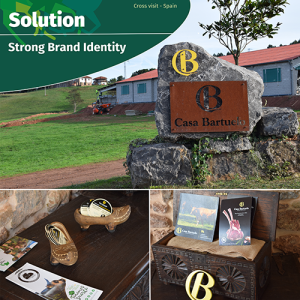
This farm, an Asturian Casería, demonstrates the power of a strong brand and family identity built up over generations. This consistent and authentic image fosters a deep sense of pride, belonging, and continuity, forming the foundation of a resilient rural enterprise.
Purpose of the Solution
Having a strong and authentic identity helps the farm to stand out in the market, build customer loyalty, and secure intergenerational continuity. When rooted in family values, it also reinforces credibility, supports rural community ties, and ensures that business decisions align with long-term sustainability over short-term profit.
Benefits
- Market differentiation: a recognizable, authentic brand helps the farm stand out in competitive markets.
- Customer trust and loyalty: transparency and a personal connection to the family story enhance credibility.
- Heritage preservation: family-led branding helps to keep local culture, traditions, and artisanal practices alive.
- Continuity and succession: shared identity and values facilitate generational transition and business stability.
- Community engagement: strong family reputation fosters collaboration and strengthens ties with local stakeholders.
- Value-added potential: branding can support premium positioning based on quality, origin, or sustainability claims.
Drawbacks/ Potential Challenges
- Maintaining authenticity: as the farm grows, it can be difficult to stay true to its values while innovating.
- Leadership succession: transferring both the business and the brand identity across generations requires alignment and planning.
- Resource demands: building and maintaining a brand requires time, communication skills, and financial investment.
- Reputation sensitivity: family-based brands depend heavily on public perception, so mistakes can quickly affect trust.
- Balancing tradition and innovation: excessive attachment to tradition may hinder the adaptation to new markets or consumer expectations.
Rational Deworming
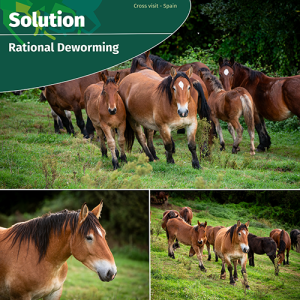
This farm’s large grazing area (20 ha) allows horses to be managed with a rational, low-frequency deworming strategy, treating them once a year, usually between October and November, when parasite pressure and grazing activity decrease.
Additionally, when horses return from Extremadura (450 ha) before summer, they undergo a sanitation protocol that includes disinfection and treatment against external parasites, particularly ticks.
Purpose of the Solution
Implementing this solution helps reduce the development of anthelmintic resistance by avoiding unnecessary treatments, aligns deworming with the real parasite exposure of horses grazing on large, well-managed pastures, and supports overall horse health by combining internal parasite control with targeted measures against external pests; it also enhances long-term sustainability and reduces costs, making it an efficient approach for extensive equine systems.
Benefits
- Reduces long-term costs for medications
- Minimises horses’ exposure to unnecessary drugs
- Helps prevent the development of anthelmintic resistance
- Lowers the risk of drug residues entering soil and water
- Supports biodiversity, including dung beetles and soil fauna
- Promotes more environmentally friendly grazing practices
Drawbacks/ Potential Challenges
- Higher initial costs due to diagnostic testing (e.g., fecal analyses, ELISA) and operational requirements such as sample collection and record-keeping — even though these steps are currently not part of the farm’s routine.
On-farm Processing and Direct Sales
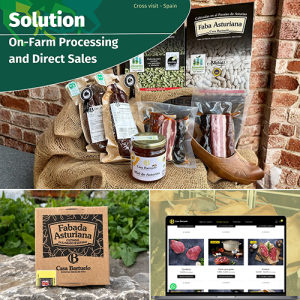
This farm demonstrates the positive effects of on-farm processing and direct marketing. By managing their own small processing plant, producing beef and traditional products such as chorizo, and selling directly through local markets and a well-designed website, the farmers have strengthened their connection with consumers. This approach creates added value, transparency, and resilience, ensuring that the benefits of production remain within the rural community.
Purpose of the Solution
Processing and selling their own products allows farmers to capture more value from their raw materials, diversify their income, and build direct relationships with their customers. This approach reduces dependence on intermediaries, enhances product traceability, and enables farmers to tell their story through authentic, high-quality products. This strategy promotes short supply chains, rural vitality, and consumer confidence in local food systems.
Benefits
- Value addition: processing meat or derived products increases profit margins and product diversity.
- Closer consumer connection: direct sales foster trust, transparency, and loyalty through personal contact and storytelling.
- Market independence: reduced reliance on large distributors and volatile market prices.
- Brand visibility: local markets and an online presence enhance recognition and credibility.
- Local economic impact: keeping more income within the rural area supports the community sustainability.
- Product differentiation: allows the farm to highlight quality, origin, and animal welfare attributes.
Drawbacks/ Potential Challenges
- Regulatory requirements: food safety, labelling, and traceability standards require strict compliance and monitoring.
- Investment and infrastructure: processing facilities requires capital, equipment, and maintenance.
- Technical expertise: safe processing, packaging and marketing require specific skills and ongoing training.
- Time and workload: direct marketing adds administrative and customer-facing tasks to farmers’ routines.
- Market reach: building an online presence or steady local clientele takes time and effort in terms of communication.