Using “Nannies” to Facilitate Weaning
Pasture Recovery Strategy: Drainage, Soil Stabilisation, Overseeding & Rotational Grazing
Rack System for Animal Feeding
Stabilized Corridors Connecting All Paddocks
Foal Protection Structures in Stables
Cuadra Casa Capellán is an equine facility specialized in the breeding, management, and training of sport horses, primarily show jumpers. The farm covers 40 hectares, of which 25 hectares correspond to productive grasslands gradually obtained through the conversion of eucalyptus forest. The perimeter is protected by game fencing to prevent damage caused by wildlife. The management system prioritizes animal welfare, with horses kept predominantly under extensive conditions throughout the year, organized in stable social groups and only temporarily housed indoors for handling purposes.
The infrastructure is based on a functional design of paddocks interconnected by stabilized corridors 3–3.5 m in width, facilitating safe movement and reducing labor demands. Resting and exercise areas feature drained substrates, rubber mats, and locally sourced feldspar sand, a highly hygroscopic material that contributes to optimal hygienic conditions. The feeding system combines ad libitum forage, concentrates administered twice daily, and feeder designs aimed at minimizing waste, while manure management through composting supports the sustainability of the system.
The breeding program is highly controlled and focused on genetic improvement, with strict selection of mares based on fertility and the application of advanced reproductive biotechnologies. Foal management emphasizes early socialization, controlled weaning, and integration into groups led by a “nanny” horse — an older mare for fillies or a gelding for colts — promoting balanced behavioral development.
The stables include a dedicated breeding and handling area designed to minimize stress and ensure the safety of both mare and foal. Features such as rollers and adjustable openings help reduce the risk of accidents during handling.
Overall, the facility integrates high-level genetics, functional infrastructure design, and sustainable management practices to produce athletic, well-balanced horses suited for high-performance sport.
Using “Nannies” to Facilitate Weaning
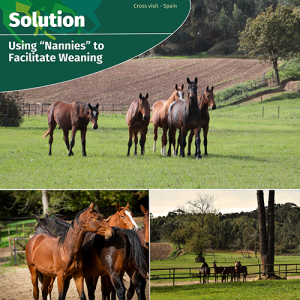
This farm implements an effective strategy to support the social development of young horses. Foals aged 1–2 years are grouped by age and sex in paddocks to promote socialization. Each group includes an experienced “nanny”—an older mare for fillies or a gelding for colts—to encourage calm, positive interactions. This adult horse helps regulate behavior and maintain stable group dynamics.
Purpose of the Solution
Weaning can be stressful for foals. To reduce this stress, nannies are introduced before weaning so that foals become familiar with them. This provides reassurance once they are separated from their mothers.
Benefits
- Supports social learning and communication
- Promotes smoother weaning and behavioural stability
- Prepares foals for future group living
- Mirrors natural herd structure, encouraging calm leadership
Drawbacks/ Potential Challenges
- Careful selection of the “nanny” is essential
- Risk of rough play or conflicts over hierarchy
- More complex grouping and management
- Requires sufficient paddock/ grassland space
- Ongoing monitoring to detect stress or bullying
Pasture Recovery Strategy: Drainage, Soil Stabilisation, Overseeding & Rotational Grazing
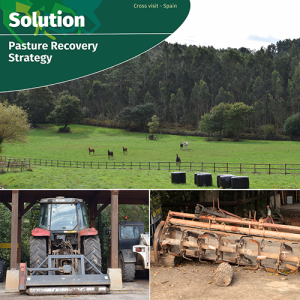
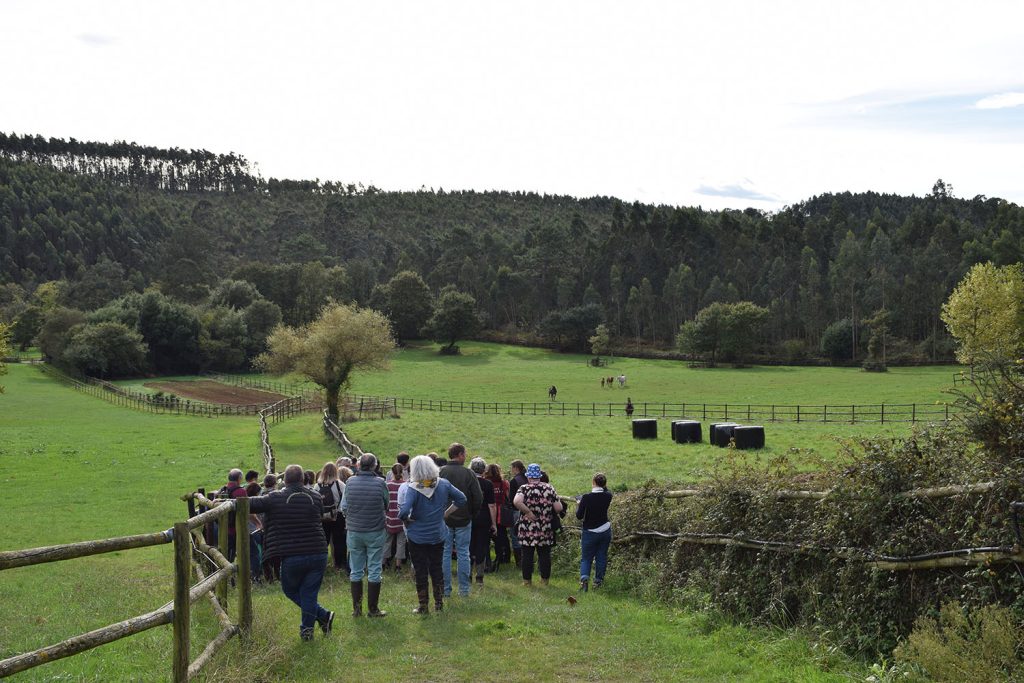
This farm employs a comprehensive pasture recovery strategy to keep grazing areas safe, productive, and resilient year-round. The farm combines drainage, soil stabilization, rolling, and overseeding with a rotational-grazing system that allows pastures to rest and regenerate between grazing periods, even during frequent rainfall.
Several paddocks are linked to a common stabilized area featuring a sandpit, water and salt access, and a shelter that provides shade, protection, and ad libitum hay.
Purpose of the Solution
In high-rainfall regions, pastures can quickly become muddy, compacted, or structurally damaged. Integrating drainage, stabilisation, and overseeding into a rotational grazing system helps maintain a healthy sward, supports soil resilience, and ensures continuous forage production. Shelters within each paddock also reduce pasture degradation by offering horses a dry, stabilised area for resting and feeding, especially during winter or wet periods.
Benefits
- More resilient pastures thanks to better drainage and stabilisation
- Faster regrowth and improved forage quality through overseeding
- Safer footing and reduced injury risk
- More efficient rotational grazing with better rest–recovery cycles
- Shelters and sandpits protect horses and reduce pasture damage in wet periods
- Better year-round use of paddocks, even in rainy climates
Drawbacks/ Potential Challenges
- Financial and labour investment for drainage and stabilisation
- Need for technical knowledge to plan and execute improvements
- Weather can delay rolling, overseeding, or machinery access
- Requires appropriate equipment for soil work and maintenance
- More complex planning of rotations and upkeep of shelter areas
Rack System for Animal Feeding
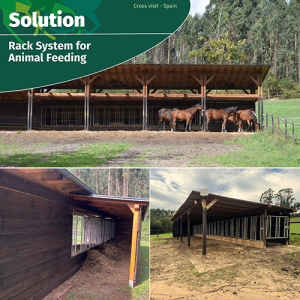
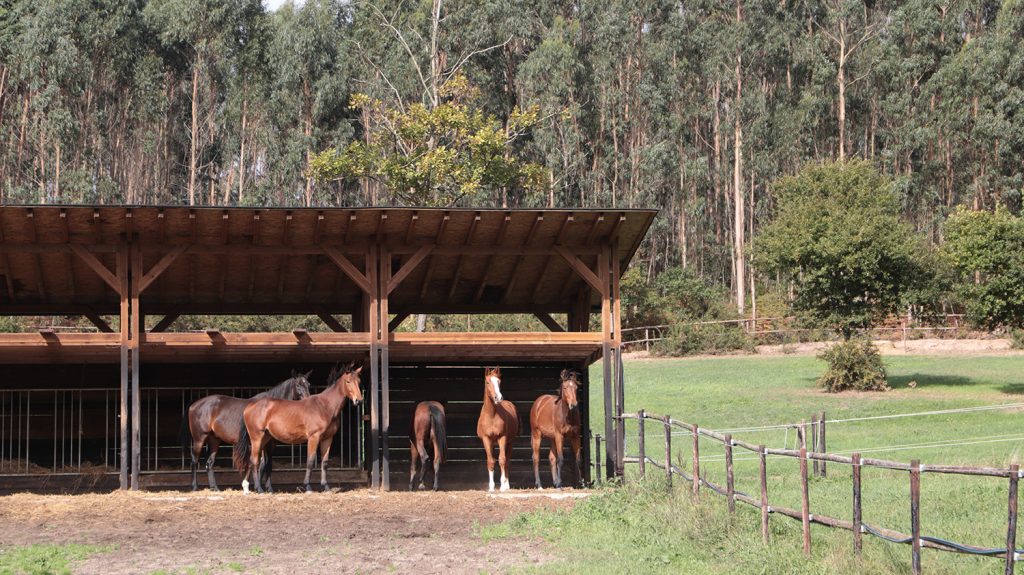
This farm features large shelters built on stabilized ground, offering shade and protection from rain and wind while giving horses continuous access to hay. The hay feeders are designed so tractors can load hay from one side while horses eat from the other, enhancing safety and reducing forage waste by about 30%. Some shelters also include an elevated second level to store hay and keep it dry.
Purpose of the Solution
A well-designed rack system ensures efficient, low-waste feeding while maintaining clean, dry hay. The structure of the shelters reduces trampling and mud build-up, creating a safer and more comfortable feeding environment throughout the year.
Benefits
- Reduced hay waste and lower feeding costs
- Cleaner, drier hay that maintains nutritional quality
- Improved horse safety by separating machinery access from feeding areas
- Less mud and ground damage thanks to stabilised shelter zones
- More comfortable feeding conditions in all weather
Drawbacks/ Potential Challenges
- Initial investment in shelter construction and feeder design
- Requires space for tractor access and safe manoeuvring
- Regular cleaning and maintenance of feeding areas
- Risk of injury if the bars are not spaced correctly.
Stabilized Corridors Connecting All Paddocks
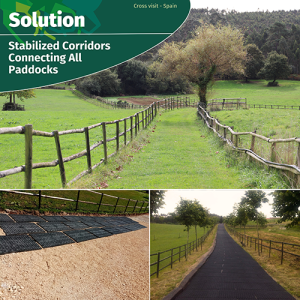
This farm features an excellent corridor system connecting all paddocks. In high-traffic or muddy areas, the corridors are stabilized with rubber mats covered with soil and grass, creating a firm, safe walkway that maintains a natural appearance. These corridors allow horses to be moved easily between fields year-round, even during wet or muddy periods.
Purpose of the Solution
Safe, stabilised corridors prevent excessive mud in access routes, ensure year-round movement between paddocks, and support efficient handling of animals during rotations or daily management.
️Benefits
- Safe, reliable movement of horses and handlers in all weather
- Reduced mud and erosion at gateways and narrow passages
- Smoother rotational movements thanks to always-accessible routes
- Less damage concentrated in entrances and high-use pathways
- Natural look due to grass growing over the stabilised base
- Improved daily efficiency when moving groups between paddocks
Drawbacks/ Potential Challenges
- Upfront costs for mats, soil work, and installation
- Planning and labour needed to design effective corridor routes
- Periodic reseeding to maintain grass cover
- Sufficient width required for safe horse flow
- Additional drainage measures may be needed in very wet spots
Foal Protection Structures in Stables
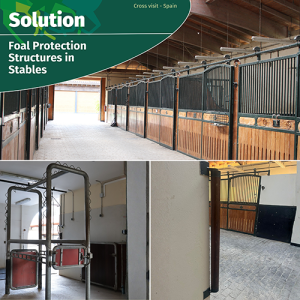
This farm has thoughtful foal-protection structures designed to keep foals safe during routine handling of their mothers. Rollers are installed in stable corners to prevent foals from hitting or scraping their hips while moving around the mare. Small foal enclosures with low doors allow foals to stay nearby during mare treatments or management, minimizing the risk of accidental injury.
Purpose of the Solution
Foals are curious, fast-moving, and easily startled, which makes them vulnerable to accidental impacts inside stables, especially when mares are restrained for treatment. Installing protective devices reduces the risk of hip injuries, improves overall safety, and ensures that both mare and foal can be handled calmly and efficiently. This improves welfare, reduces veterinary risks, and creates a safer working environment for handlers.
️ Benefits
- Improved safety – reduces the risk of foals hitting corners, walls, or equipment during mare handling.
- Lower injury rates – rollers and padded structures protect vulnerable hips and joints.
- Calmer handling – mares can be treated without the stress of the foal getting in dangerous positions.
- Better welfare – foals can remain close to their mothers in a secure, dedicated space.
- More efficient management – handlers can focus on the mare’s treatment without constant intervention to protect the foal.
Drawbacks/ Potential Challenges
- Initial investment – installing rollers and foal-safe enclosures requires materials and labour.
- Space requirements – stables must be large enough to accommodate added protective structures.
- Maintenance – rollers, padding, and doors need regular checks and replacement if worn.
- Foal behaviour – highly active or stressed foals may still attempt to jump or push against barriers.
- Adaptation time – mares and foals may need a short period to get used to the new layout.