Free Grazing with Shadow Access
Socialization of Young Horses
Uncut Flower Strips
Diversification of Farm Activities
Fodder Self-sufficiency
Use of Solar Panels for Energy Supply
Coudelaria João Pedro Rodrigues, located in Samora Correia, Portugal, is a 100-hectare family-run farm dedicated to the breeding of Lusitano horses, combining tradition, innovation, and environmental stewardship. The farm houses nearly 100 horses, including client horses and annually born foals. Reproductive management uses carefully selected stallions, fresh and frozen semen, and embryo transfer to reduce inbreeding and optimize genetic quality.
Foals are weaned at six to seven months and grouped by age until three years old, when they are moved to stables. All horses have access to pasture for natural grazing, supplemented with concentrated feed twice daily. The farm implements innovative solutions for animal welfare and sustainability, including on-site hay production and expanded paddocks.
Revenue diversification through semen sales, horse boarding, riding lessons, tourism, and forestry products such as cork and pine enhances self-sufficiency and operational resilience, ensuring both economic viability and the promotion of the Lusitano breed.
Free Grazing with Shadow Access
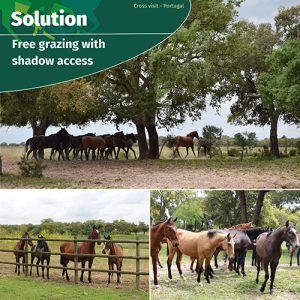
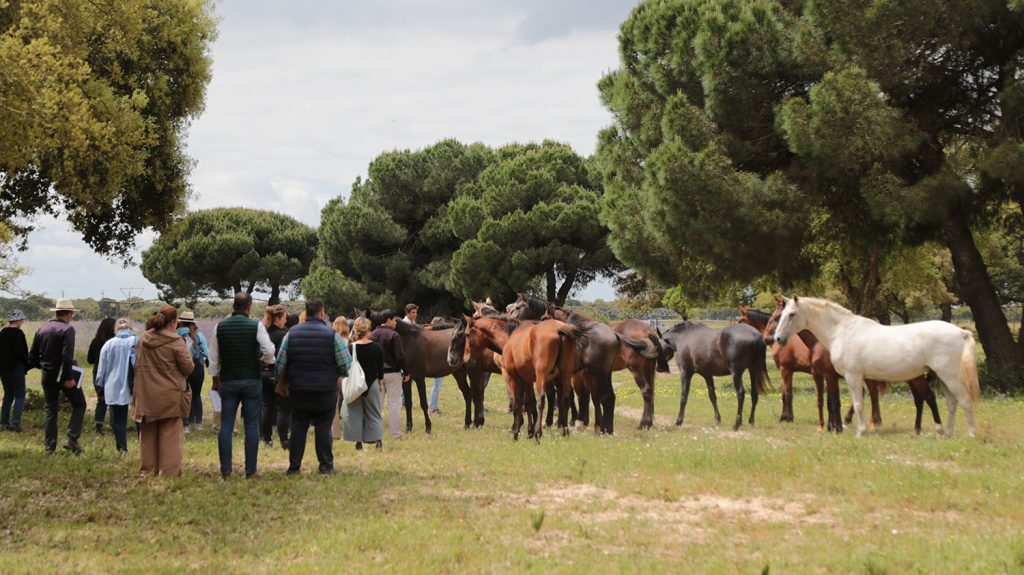
This farm operates under a management system in which Lusitano horses are allowed to graze freely across both meadow and forest areas. These spaces provide ample shade, a constant water supply, no presence of predators, and a natural environment where the horses can roam, graze, and interact. Dedicated paddocks and large open fenced areas ensure that the horses have sufficient room to move and rest comfortably.
Purpose of the Solution
This approach supports the horses natural behaviour, offering access to 3F: freedom of movement, forage (access to a variety of grasses), friends (socialization with other horses) and shaded areas, which is contributing positively to their welfare and overall health.
Implementation Cost
The feasibility of this system depends largely on the size of the farm and the availability of land — particularly hectares of forest and meadow areas — and the farmer’s management of such resources.
Benefits
- Improved animal welfare – horses can express natural behaviours (grazing, roaming, socializing).
- Diverse diet – access to mixed grasses improves nutritional balance.
- Thermal comfort – shaded areas protect against heat stress.
- Reduced stress – freedom of movement and social contact reduce behavioral issues.
- Lower infrastructure needs – less confinement means fewer stables.
- Reduced workload (no stalls to clean)
Drawbacks/ Potential Challenges
- Land dependency – requires significant hectares of forest and meadow.
- Risk of injury – uneven terrain or natural obstacles can cause accidents.
- Monitoring challenges – requires more time to regularly check individual animals.
- Fencing and security – large areas need secure fencing to prevent escapes and predators.
- Seasonal limitations – grass availability may fluctuate with seasons.
Socialization of Young Horses
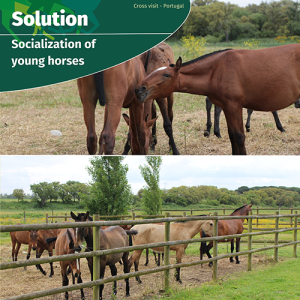
This farm follows a thoughtful management strategy to support the social development of young horses. Lusitano foals around six months old are gradually introduced to slightly older foals (under one year of age) in shared paddocks. To promote calm group dynamics and guide social interactions, an experienced older mare is included in the group, helping to regulate and stabilize the foals’ behaviour.
Purpose of the Solution
This approach supports the horses’ natural behaviour, offering access to 3F: freedom of movement, forage (access to a variety of grasses), friends (socialization with other horses) and shaded areas, and socialization with other horses—contributing positively to their welfare and overall health. Additionally, it helps reduce the stress of weaning for the foal.
Benefits
- Supports social learning – young foals learn equine communication and hierarchy.
- Behavioural stability – the older mare helps reduce conflicts and stress.
- Smooth weaning – gradual transition away from the dam with social support.
- Prepares for group living – improves adaptability for future group or herd environments.
- Natural leadership – mirrors natural herd structure, promoting calm and order.
- Reducing weaning stress – the foal is gradually separated from its mother and integrated into a group of familiar foals, easing the transition and minimizing anxiety.
Drawbacks / Potential Challenges
- Requires careful selection – the mare must have a calm, tolerant temperament.
- Risk of injury – socialization can lead to rough play or hierarchy disputes.
- More complex management – grouping must be adjusted according to age and temperament.
- Space requirements – enough paddock space is needed to avoid overcrowding.
- Monitoring needed – early detection of bullying or stress is crucial.
Uncut Flower Strips
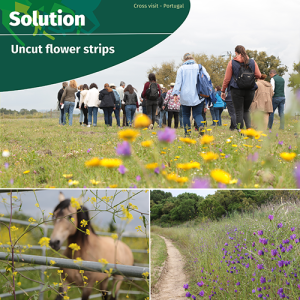
This farm maintains extensive areas of uncut vegetation rich in biodiversity and abundant in flowering plant species. This approach supports ecological balance within the farm.
Purpose of the Solution
This practice helps promote on-farm biodiversity by providing habitat and food sources for pollinators, insects, and other beneficial wildlife. It contributes to soil health by improving structure, reducing erosion, and supporting natural nutrient cycles. When accessible, these areas offer a more natural, enriched environment that can encourage exploratory behaviour and occasional self-selection of wild herbs or plants with potential health benefits.
Benefits
- Boosts biodiversity – attracts pollinators, insects, birds, and other wildlife.
- Soil protection – root systems help stabilize the soil and retain moisture.
- Climate resilience – uncut vegetation can buffer against drought and heat.
- Low maintenance – fewer mowing sessions reduce fuel use and machinery costs.
- Positive image – aligns with eco-friendly and nature-positive farming practices.
- Strips of grasses and flowering plants promote natural pest control, reducing the need for chemical treatments on the farm.
Drawbacks/ Potential Challenges
- Potential weed spread – invasive species may proliferate if not monitored.
- Fire risk – in dry seasons, tall vegetation may pose a fire hazard.
- Presence of ticks and toxic plants – these areas may harbour parasites or plants that are harmful to livestock.
- Reduced pasture availability – if not well planned, these strips can limit access to grazing areas or affect the quality and quantity of available fodder.
Diversification of Farm Activities
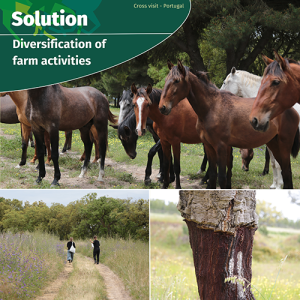
This farm applies a strategic diversification of activities beyond the breeding of Lusitano horses. The importance of developing multiple income streams was highlighted as a key factor in ensuring the resilience and efficiency of the overall system. In addition to horse breeding, the farm includes boarding services, equestrian tourism, riding lessons, semen sales, horse sales, and the production and sale of agroforestry products such as cork and pine.
Purpose of the Solution
Diversifying farm activities is an effective strategy to reduce economic risk and improve resilience. By combining core operations—such as animal breeding—with complementary services like tourism, boarding, training, or the sale of related products (e.g. agroforestry goods or genetic material), farms can create multiple income streams. This not only makes better use of existing resources but also helps balance seasonal fluctuations and market uncertainties, contributing to a more sustainable and efficient farming system.
Benefits
- Economic resilience – multiple income streams reduce dependence on one market.
- Efficient use of resources – land, facilities, and labour can serve several functions.
- Risk reduction – buffers against seasonal or sector-specific downturns.
- Increased visibility – tourism and services attract a broader audience and potential customers.
- Job creation – more activities can generate local employment opportunities.
- Enhanced sustainability – integration of agroforestry or circular practices supports environmental goals.
Drawbacks/ Potential Challenges
- Increased complexity – managing diverse activities requires broader skills and coordination.
- Higher initial investment – new services may need infrastructure, training, or certifications.
- Time and labour intensive – diversification can strain limited workforce resources.
Fodder Self-sufficiency
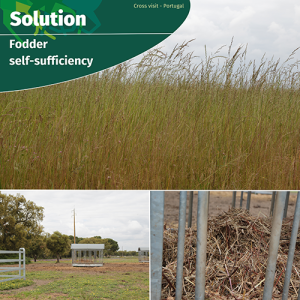
This farm implements a practice of fodder self-sufficiency by producing its own hay throughout the year using 40 hectares of irrigated pastures. This strategy eliminates the need to purchase external forage, with only a small amount of concentrate (around 2 kg/day per animal) being bought to complement the horses’ diet.
Purpose of the Solution
Producing your own fodder increases independence from volatile markets and external suppliers. It allows for greater control over forage quality, optimizes the use of available land, and ensures a steady year-round supply for the herd. In times of price fluctuations or supply disruptions, self-sufficiency strengthens economic resilience and supports a more circular, resource-efficient system. It also promotes the use of a short supply chain, helping to reduce the farm’s environmental impact.
Benefits
- Cost savings – reduces expenses related to purchasing and transporting hay.
- Supply security – ensures constant availability of forage, even in times of shortage.
- Efficient land use – turns available land into a productive, self-sustaining resource.
- Environmental benefits – reduced transport and packaging mean lower carbon footprint of the farm.
Drawbacks/ Potential Challenges
- Need for land – requires significant surface area, especially with horses’ high forage demand.
- Weather dependency – climate and seasonal variability can affect yields and storage quality.
- Labour and equipment – harvesting and storing hay demands time, machinery, and technical know-how.
- Storage needs – hay must be properly dried and stored to prevent spoilage or fire risk.
- Water usage – irrigated systems may raise sustainability or cost concerns in some regions.
Use of Solar Panels for Energy Supply
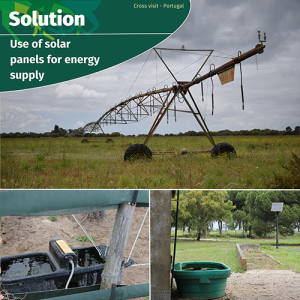
This farm has implemented a solar-powered water pump system, along with the broader use of solar panels to supply electricity for the entire property. Solar energy is used not only to power the farm but also to operate LED lighting and irrigate pastures, while meeting the drinking water needs of the horses. By installing solar panels across the land, the farm has significantly reduced its energy costs.
Purpose of the Solution
Using solar energy to power farm operations reduces reliance on fossil fuels and cuts energy costs. It ensures a reliable water supply for both irrigation and animal hydration, which is especially useful in remote areas. This approach also supports environmental sustainability by lowering the farm’s carbon footprint and increasing energy independence.
Implementation Cost
Photovoltaic installation on an existing roof: a 36 kW peak system can cost around 45,000€. It will depend on the size, equipment quality and installation conditions.
Solar-powered center pivot irrigation systems (for 40ha): The estimated combined cost of a center pivot irrigation system, water pump, and solar panels ranges from €60,000 to €80,000. This depends on factors such as terrain, water source depth, system capacity, and the extent of infrastructure needed.
In both cases, EU or national subsidies may help reduce upfront costs
Benefits
- Energy and financial savings – significant reduction in electricity or fuel bills.
- Sustainability – lowers greenhouse gas emissions and supports renewable energy use.
- Autonomy – provides electricity and water access in off-grid or rural areas without external supply.
Drawbacks/ Potential Challenges
- High initial investment – requires upfront costs for solar panels, pump, and infrastructure.
- Weather dependent – efficiency may drop during cloudy days or in regions with low sunlight.
- Maintenance – solar panels and pumps require periodic cleaning and technical maintenance.