Diversification of Farm Activities
Branding and Female Leadership
Free Grazing under Silvopastoral System
Progressive Weaning
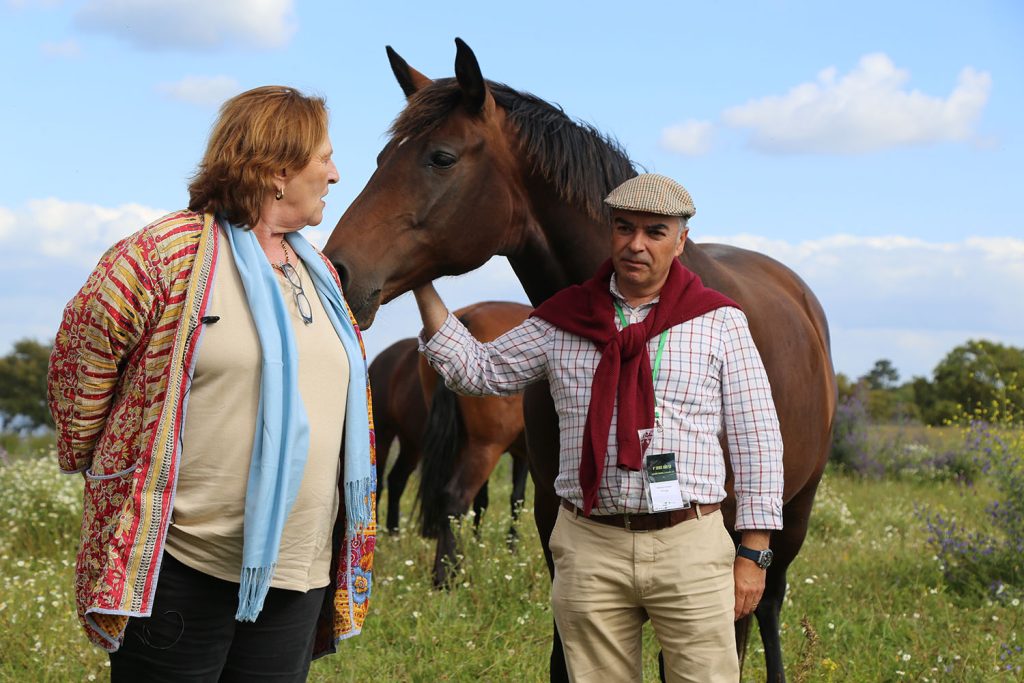
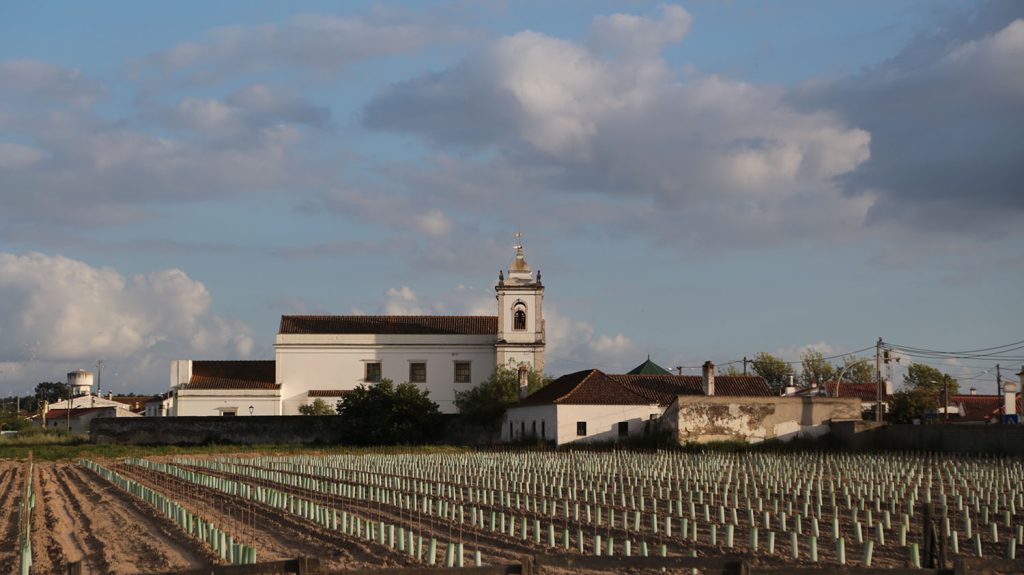
Casa Cadaval, located in Herdade de Muge, Portugal, covers 5,000 hectares and is managed by Teresa Schönborn-Wiesentheid, representing the fifth generation of female leadership. The estate integrates Lusitano horse breeding, Tejo wine production, and conservation of the native Mertolenga cattle breed within a sustainable land management model that combines agriculture, forestry, and livestock production.
The Lusitano stud comprises approximately 70 horses, including 17 broodmares from key matriarchal lines, managed through rigorous selection and advanced reproductive techniques such as embryo transfer. All foals undergo piroplasmosis screening, ensuring piro-negative stock suitable for export.
Horses are raised in a 100% grass-fed silvopastoral system, combining open pastures with cork and oak woodlands. This approach supports animal welfare, promotes ecosystem health, and contributes to wildfire prevention, demonstrating how tradition, scientific management, and sustainable land use work together to secure high-quality production, biodiversity, and long-term resilience.
Diversification of Farm Activities
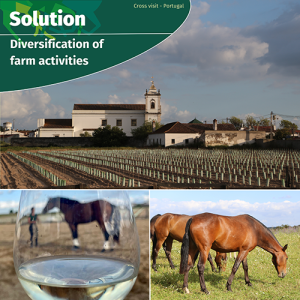
This farm implements a well-executed strategy of diversification that goes far beyond Lusitano horse breeding. Over half of its 5,000 hectares are dedicated to agricultural crops such as tomatoes and corn, while the remainder supports forestry (cork production), wine and beef production, and horse breeding. Each activity is carefully integrated into a holistic land management system, supported by a strong and coherent sales strategy. Although horse breeding represents a small portion of the farm’s output, it is carried out with great care and technical expertise.
Purpose of the Solution
Diversifying farm activities boosts economic resilience and makes better use of land, labour, and infrastructure. By combining core operations with complementary sectors like wine, forestry, and tourism, farms can create multiple income streams and reduce reliance on a single market. This integrated approach spreads risk, smooths seasonal fluctuations, and supports long-term sustainability.
Benefits
- Economic resilience – multiple income streams buffer against market fluctuations.
- Resource efficiency – land, infrastructure, and staff serve more than one function.
- Risk mitigation – weather, disease, or market disruptions in one area are less critical.
- Year-round activity – reduces seasonal downtime and improves cash flow.
- Brand value – diverse, high-quality products strengthen the estate’s image and outreach.
- Environmental synergy – agroforestry, wine, and livestock activities can complement each other ecologically.
Drawbacks/ Potential Challenges
- Greater complexity – requires advanced planning and coordination across sectors.
- Increased investment – infrastructure, staff training, and marketing for each activity.
- Higher management demand – success depends on multidisciplinary skills and expertise.
- Possible competition for resources – land or labour may need to be reallocated seasonally.
Branding and Female Leadership
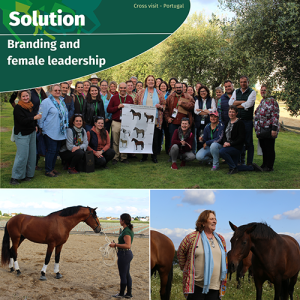
This farm showcases the power of a strong brand identity — recognized both nationally and internationally — built over centuries and now led by a woman, highlighting the value of female leadership in the equine sector. This clear and consistent identity fosters a sense of pride, belonging, and stability among employees. Workers feel part of something meaningful and prestigious, contributing to remarkably low staff turnover and a positive, cohesive team environment.
Purpose of the Solution
A strong identity builds trust, pride, and stability among workers, leading to low staff turnover and a positive team culture. Promoting female leadership adds diversity and strengthens innovation in rural sectors, making the farm more resilient and forward-looking.
Benefits
- Employee retention: Strong identity and leadership create a sense of belonging, reducing staff turnover.
- Team motivation: Workers feel pride and purpose, improving morale and productivity.
- Market recognition: A clear brand boosts visibility and trust among clients and partners.
- Leadership diversity: Female leadership brings new perspectives, often linked to more inclusive and sustainable management.
- Cultural impact: Challenges gender norms in agriculture, inspiring future generations.
- Reputation and legacy: Enhances the farm’s historical value and public image.
Drawbacks/ Potential Challenges
- Brand dependency: Overreliance on identity might make adapting to change harder.
- Pressure on leadership: Strong public visibility can place extra pressure on the leading figure, especially women in male-dominated settings.
- Slow innovation: A deeply rooted identity can sometimes resist operational or structural change.
- Perceived elitism: A prestigious brand may unintentionally create distance from smaller or less-resourced peers or collaborators.
Free Grazing under Silvopastoral System
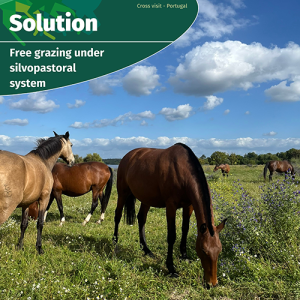
This farm employs a silvopastoral system where cork and oak woodlands are seamlessly integrated with open pastures. Horses actively help manage vegetation by controlling shrub growth, reducing wildfire risk, and maintaining ecosystem balance. Although beef cattle and horses are usually managed separately, rotational grazing is used to allow the land to recover naturally and improve pasture quality.
Purpose of the Solution
Integrating silvopastoral systems allows for more sustainable land use by combining tree cover with managed grazing. Horses naturally control underbrush, lowering wildfire risk and reducing the need for mechanical or chemical interventions. Rotational grazing between horses and beef cattle enhances soil recovery and pasture quality, supporting both animal welfare and ecological resilience.
Benefits
- Natural control of shrub growth and reduced wildfire risk
- Improved soil health and pasture regeneration
- Supports biodiversity and ecosystem resilience
- Enhances animal welfare through shade and diverse environments
- Decreases reliance on external inputs (e.g., machinery, herbicides)
Drawbacks/ Potential Challenges
- Requires careful planning and monitoring of grazing rotations
- Potential competition between livestock for forage
Progressive Weaning
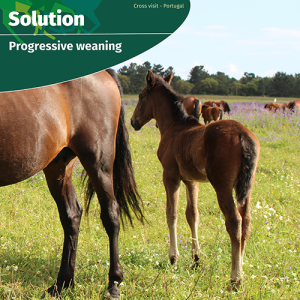
This farm implements a gentle, low-stress weaning method based on gradual separation. Starting in the pasture, the oldest foals are weaned first by removing just two mares, followed by a few more over several weeks. This phased approach keeps foals in a familiar environment with their peers, reducing stress and supporting healthier development.
Purpose of the Solution
Progressive weaning lowers stress, supports better behaviour and health, and mirrors natural patterns—promoting a smoother, more welfare-friendly transition for both foals and mares.
Benefits
- Reduces stress for both mares and foals
- Encourages positive early handling experiences
- Promotes healthy social behaviour and herd integration
- Minimizes risk of injury or trauma during weaning
- Enhances long-term manageability of young horses
Drawbacks/ Potential Challenges
- Demands careful observation and management
- Longer weaning period may demand more planning and resources